
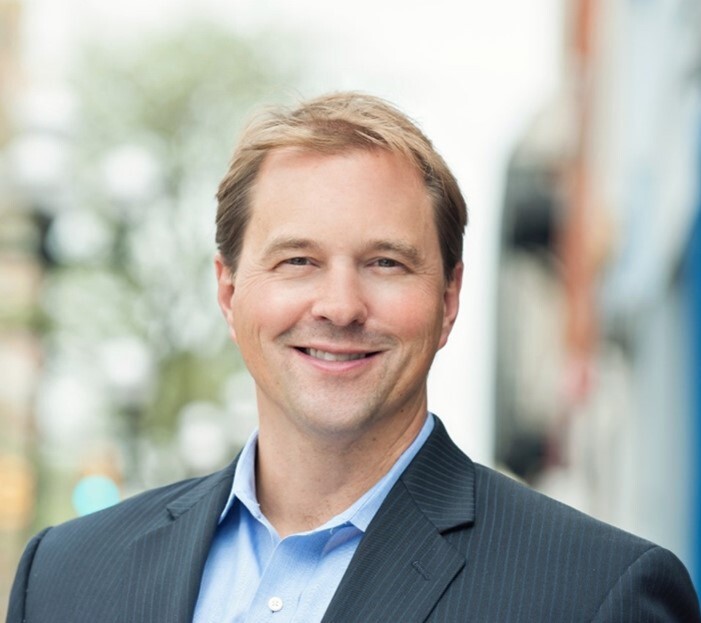
This month, we are pleased to be putting the spotlight on one of our affiliated consultants. Vince Nystrom has one of those resumes that’s hard to know where to begin. He is a consultant, innovator, entrepreneur, and a leader in economic development. For over 30 years, Vince has made a difference for businesses across Michigan. This year, we were pleased to work with him and the Research Universities for Michigan (RU4M), an alliance of four Michigan universities, Michigan State University, Michigan Technological University, University of Michigan, and Wayne State University. In the interview, below you will learn more why so many (including PPA) enjoy turning to him as a consultant.
You have worked in a variety of different sectors throughout your career (engineering, economic development, venture capital). How do you bring the different experiences and viewpoints from each of these sectors into the work you do now?
Even though the titles and roles have changed over the years, the constant has always been innovation, entrepreneurism, and connection. Each position has both complemented and reinforced the others. After my early engineering and startup work, nearly everything I’ve done has centered on collaboration—bringing people together, aligning interests, and solving problems collectively. Economic development, especially, is a contact sport. Relationships matter more than anything, and you never sacrifice a relationship for a short-term win. I’ve been fortunate to have mentors who instilled the values of open-source economic development, genuine partnerships, taking every meeting, and being as supportive as possible of others’ efforts. Those lessons shape how I work today: collaboration, relationship-driven, and focused on long-term community and economic outcomes.
You have called many different regions of Michigan home. Does that shape the perspective you bring to your work?
Absolutely. I’ve lived and worked in Southeast Michigan, Lansing, Ann Arbor, and now the Upper Peninsula. Each region has its own economic assets, culture, and identity, and experiencing them firsthand fundamentally shapes how you think about strategy. Michigan isn’t a single innovation ecosystem — it’s a network of interconnected ecosystems, each with different industries, strengths, and talent pools. The U.P. has enormous potential in outdoor recreation technology, natural resources, and rural innovation. Southeast Michigan leads in mobility, R&D, and Industry 4.0. Lansing combines state government, the insurance sector, and higher education into a unique economy that is growing also in startup and healthtech. Ann Arbor thrives on research, commercialization, and venture-backed start-ups. Each region offers something unique, yet all share a focus on community strength and prosperity. That firsthand regional perspective allows me to build strategies that work locally while still contributing to statewide success.
In your experience, what’s the most critical element in designing effective economic development initiatives?
The most important element is understanding that successful strategies look different in every region and often each sector. You have to listen deeply to local leaders and the community to understand the actual dynamics of that industry and economy. There is no one-size-fits-all approach. Common themes usually revolve around community/place, talent, and infrastructure. Funding matters, but leading with incentives alone is risky. You want companies to succeed because the ecosystem supports them—not only because of a grant or incentive. Otherwise, they may leave for the next better offer. Economic developers must play the role of neutral broker: building programs, connecting companies with customers and talent, and helping them navigate resources and obstacles. The goal is long-term, sustainable success for both businesses and communities.
How do research, data, and evaluation play a role in these initiatives? How do you balance local community needs with statewide innovation or investment goals?
Understanding your region is paramount. Research and data help identify which sectors are growing, which are at risk, and what barriers businesses and residents are facing. But data alone isn’t enough—you also need continuous feedback from the community. The best insights often come from conversations, not spreadsheets or studies. It’s also important to look outward. Benchmarking best practices from other regions—especially those with similar characteristics—can uncover approaches worth adapting. For example, Ann Arbor has had tremendous success engaging alumni from the university and local community. That model is portable: people who have lived in a place already understand its value and are more likely to return, invest, or grow a business there. Balancing local needs with statewide goals starts by deeply understanding those local strengths and challenges. This provides for a much more natural and effective alignment with broader state strategies, which improves the chances of success for both parties.
As an affiliate consultant with PPA, what types of projects are you most excited to engage in?
I’m most excited about projects at the intersection of economic development and entrepreneurship — the two areas where I have the strongest background and network. This includes university engagement, innovation and startup acceleration, rural growth, business development, sector-strengthening strategies, and community/economic growth initiatives. I enjoy working on efforts that build momentum — where stakeholders are aligned, entrepreneurs are supported, and communities can see tangible progress.
What advice would you give to someone looking to create systemic changes in their local innovation ecosystem?
You cannot do this job behind a desk. You must be in the community, talking with business leaders, civic leaders, and entrepreneurs. They are your best source of real-time intelligence. On-the-ground conversations reveal the real challenges and opportunities. It’s also critical to build a strong business and community development strategy centered on business retention and expansion (BRE). Attraction gets the headlines, but your odds of success are ten times higher with companies that are already rooted in the community. Through those meetings, you’ll quickly learn what’s working and what the common-denominator barriers are. Addressing those systemic barriers is what creates long-term change and growth. And finally, don’t overlook your early-stage and second-stage companies. They are the future of your community’s economy, and supporting them now builds the foundation for the future decades of growth.