

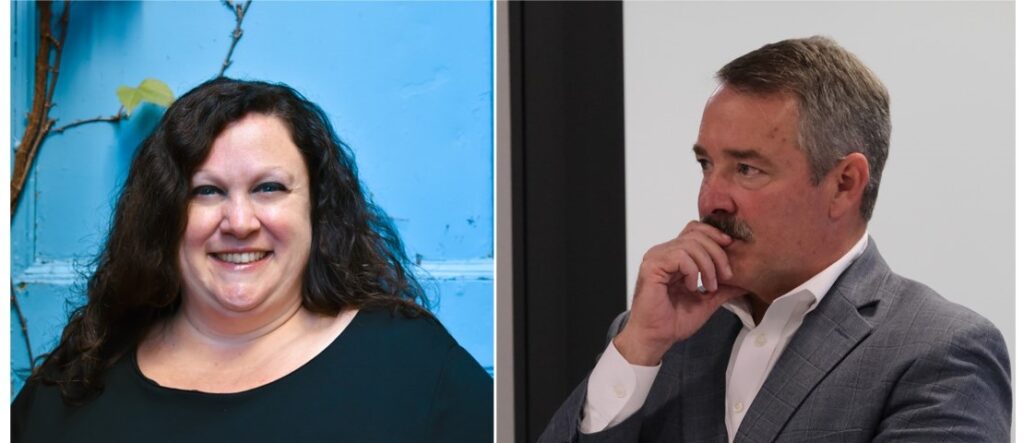
In this exclusive interview, Kelli Saunders, Vice President of Policy & Engagement at the Small Business Association of Michigan (SBAM), sat down with PPA CEO, Robert Fowler. Rob Fowler has an important and powerful perspective on small business in Michigan. Before taking the reins at PPA, he was the President and CEO of SBAM for many years, making him both an advocate for small businesses and a small business owner. In this insightful interview, they both dive into the world of small businesses today in Michigan.
The Transition: A Shift from Advocate to Owner
Having been a champion for small businesses for over 35 years, what was the most surprising or unexpected reality you faced when you became the primary owner and CEO at PPA?
Over the years, I’ve had a chance to work closely with hundreds of small business owners, and I often heard business ownership described as a “weight.” That is, the weight of making the right decisions or investments, the responsibility to employees to get it right and the consequences of getting it wrong. These become very personal when you are the business owner because you know that your decisions impact the lives and livelihoods of your entire team. I knew this before, but now I feel it. It’s personal.
As an advocate, you had a macro view of the small business landscape. Now that you are an owner, has this change in perspective altered your understanding of the challenges of owning and operating a small business?
My previous job was to understand all the policy-level issues affecting small businesses. Today, I care deeply about the issues that impact PPA at both the policy and operational levels. But no longer having the macro responsibility, I don’t have to be concerned about every small-business issue. Just the ones that impact PPA. For example, PPA has always provided our team with fairly generous paid leave. When the law was passed that requires small businesses to provide paid sick leave, I could understand that it might have been a burden for some small businesses, but we already met and exceeded the requirements… not because the law required it, but because it was right for our team.
What is the one core belief you held about small business ownership while at SBAM that has either been validated or challenged since taking the reins at PPA?
I’ve always had a profound respect for those who are willing to take the risks of starting and growing a small business. Politicians often say that small business is the backbone of the economy. I believe this even more deeply today. Some of our client-focused work keeps me involved in small business issues as we assist the Michigan Microbusiness Coalition, work with the MEDC small business leadership, and serve CDFIs in Michigan and other states. I still think small business is the backbone of our economy and that we should take better care of our backbone.
Leadership and Strategy
When you started at PPA in 2022, you took over a firm that had been in operation for over 30 years. How did you formulate a growth strategy that leveraged the firm’s existing strengths while accommodating your new vision?
I had a good understanding of PPA, having been both a client and a member of the PPA board of directors, so I appreciated its good reputation and excellent talent. Our first strategic plan aimed to grow the firm, in part, by building partnerships and expanding our presence. I knew that the more potential clients knew about the excellent team we have and the high-quality work we do, the more opportunities there would be for PPA. And I can say that in large part, the strategy has worked. We have grown by over 40% in revenue in the past 3 years.
Could you share an example of a risk you took as an owner at PPA that you might have only advised a client to take with more caution during your time at SBAM? What was the outcome?
In our first year as owners, Terry and I decided to give an 8% salary increase to everyone on staff. It was a time of high inflation, and we felt we were at risk of falling behind in the competition for talent. Because we are a professional services firm, talent is our biggest asset and our largest expense. We took the risk that we could grow revenue to offset the large investment in talent. Did it work? Our team is made up of incredibly talented professionals that I would put up against any team anywhere. And last year we had 0% turnover.
What is an essential policy that you think should be prioritized for small businesses today in Lansing?
As a business owner, father and former school board member, I have significant concerns about the state of our education system. We have been on a slow, steady decline for over 20 years, and I worry that our policymakers will not make the bold, systemic changes that are needed to truly reinvent Michigan’s education system.
Advice and Reflection
Based on your experience and what you have learned through the years at PPA, what is the single most important thing a small business owner should do right now, and how can your insights help them?
As much as possible, look over the horizon. It is easy to be so obsessed with the immediate that we don’t see significant changes coming. It is so easy to be overwhelmed by the changes we do see coming that it is tempting to ignore future issues. AI is a good example. Anyone who was a business owner/leader during the advent of the internet knows that it has fundamentally changed the way we live, work and play. We know that AI is likely to “change everything.” Our challenge is to learn to identify opportunities and understand the real threats AI can pose to our current business model.
Given your background, what is the value of an organization like the Small Business Association of Michigan (SBAM) to a firm like PPA, and how does your involvement look different now?
Like it or not, the political/policy world is about influence. Usually, when we think of political influence, we think of Big (Big Pharma, Big Ag, Big business). Experience tells me that small businesses only have influence in big numbers. Small businesses need a voice in the policymaking process, and SBAM, with over 35,000 members, is the most influential voice for small businesses in Michigan. I am proud of what SBAM has become and proud to be an elite-level member. It is money well invested.
Can you explain the challenge of having to plan for the future in today’s economic context?
One of my favorite sayings is, “If you want to make God laugh, tell him your plans.” This applies to business as well. We make plans, and then something happens across the landscape that is entirely out of our control. Inflation, drastic federal government cuts, and AI “research” are all disrupters in our world. Change is happening at an ever-rapid pace. One of my mentors used to say, “You have to keep your knees bent.” Businesses today have to be ready to change and adapt to the economic context even more rapidly than in the past.
Budget Impacts and Operational Strategy
Many policy firms diversify their client base. Has the current budget landscape accelerated your push to look more broadly and build working relationships with private foundations, nonprofits, or the corporate sector? What are some potential challenges to that diversification?
We have been working to diversify our client base and policy expertise over the last few years. The federal and state budget landscape both accelerates and complicates our need to diversify. By adding expert consultants to our Affiliated Consultant team, we will deepen our policy experience and expertise, identify new opportunities through partnerships, and continue to seek opportunities outside Michigan. We will continue to be open to partnering with non-traditional allies and out-of-state firms to seek new opportunities. Our world is changing, and we know we must adapt and change as well.